A Structural Integrity Reserve Study (SIRS) is a Florida-mandated study of the reserve funds a condo or co-op association must set aside for eight structural components, based on a visual inspection of those components. Any condominium or cooperative building three or more habitable stories must have one. The original deadline was December 31, 2025, and most buildings missed it, which means many associations are already out of compliance. A drone does not perform or sign your SIRS, but it is the fastest, safest way to get your engineer or reserve specialist the roof and facade documentation the visual inspection requires.
If your board is scrambling to catch up, or your property manager just asked “do we even need this,” this guide covers exactly which buildings must comply, what the study has to cover, what happens if you are already late, and where drone documentation actually fits into the process.
Key Takeaways (TL;DR)
- Who must comply: Condo and co-op buildings with 3+ habitable stories under Florida Statute 718.112(2)(g). HOAs under Chapter 720 are exempt.
- The deadline already passed. December 31, 2025 was the primary deadline for associations that existed before July 1, 2022. An extension to December 31, 2026 exists only if a milestone inspection is also due and completed at the same time.
- Reserves can no longer be waived. Starting January 1, 2026, SIRS reserve funding for the 8 required components is mandatory. Owners cannot vote to waive or underfund it.
- Penalties are real. Missing the deadline is a breach of the board’s fiduciary duty, and the Division can fine the association up to $5,000 per offense.
- A drone cannot replace the engineer. Only a Florida-licensed professional engineer, architect, or Reserve Specialist (RS)/Professional Reserve Analyst (PRA) can perform or verify a SIRS. A drone survey supplies the visual documentation that professional uses, specifically for the roof and exterior components that are hardest to access safely.
What is a Structural Integrity Reserve Study (SIRS) in Florida?
A SIRS is a reserve funding study, not a safety inspection. Florida law (FS 718.112(2)(g)) defines it as a study of the reserve funds required for future major repairs and replacement of common areas, based on a visual inspection of those areas. In plain terms: an engineer, architect, or reserve specialist looks at eight specific building systems, estimates when each will need major work, and builds a funding schedule so the association isn’t hit with a surprise special assessment.
It is easy to confuse with a Milestone Inspection, which is a separate, physical structural safety inspection under a different statute. We cover the difference in detail further down, because getting this wrong is one of the most common and costly mistakes condo boards make right now.
Which buildings in Miami and Florida must complete a SIRS?
Any condominium or cooperative building with three or more habitable stories. “Habitable stories” excludes parking garages and purely mechanical floors, but includes occupied lobbies and amenity decks. There is no age exemption: a building completed last year and a 1970s tower are both covered if they meet the height threshold.
- Covered: Condo and co-op associations under Chapter 718, 3+ habitable stories, regardless of age.
- Exempt: HOAs governed by Chapter 720 (single-family and townhome communities). A narrow exception also exists for some four-unit buildings of three or fewer habitable stories.
- Timeline-sensitive: Associations formed on or before July 1, 2022 fall under the original deadline structure described below. Newer associations have their own phased timelines tied to certificate-of-occupancy age.

What are the 8 structural components a SIRS must cover?
The study must evaluate eight specific systems, plus anything over a set dollar threshold that affects them. This is the checklist your engineer or RS/PRA works from:
| # | Component | Why it needs a reserve |
|---|---|---|
| 1 | Roof | Highest-cost single replacement item on most buildings; also the hardest to visually inspect without aerial access. |
| 2 | Load-bearing walls / primary structural members | The structural skeleton of the building. |
| 3 | Fireproofing and fire protection systems | Life-safety system with mandatory replacement cycles. |
| 4 | Plumbing | Common-area supply and waste lines, a frequent source of large unplanned repairs. |
| 5 | Electrical | Common-area electrical systems and infrastructure. |
| 6 | Waterproofing and exterior painting | Protects the structure beneath; directly visible from the air on facades and decks. |
| 7 | Windows and exterior doors | Building envelope components with real replacement cost at scale. |
| 8 | Any other item over the statutory threshold | Currently $25,000, adjusted annually for inflation, for anything else affecting the above systems. |
Three of these eight, roof, waterproofing/exterior painting, and windows/exterior doors, are exactly the components that are slow, expensive, and sometimes unsafe to inspect from scaffolding or a swing stage, and that a drone survey documents in a single flight.
What happens if your association missed the December 2025 SIRS deadline?
If your building needed to comply by December 31, 2025 and hasn’t, your association is currently out of compliance, and that has real consequences today, not someday. This is the most urgent reason boards are calling right now.
- Fiduciary breach. Failing to complete a required SIRS is treated as a breach of the board’s fiduciary duty to unit owners under Florida condo law.
- Civil penalties. The Division of Condominiums, Timeshares, and Mobile Homes can fine the association up to $5,000 per offense, and can act against individual officers or directors who willfully and knowingly let the violation continue.
- Insurance complications. Carriers increasingly ask for SIRS and milestone status before renewing or pricing a policy. Non-compliance can mean higher premiums or denied coverage.
- Lending problems. Units in non-compliant buildings can be classified non-warrantable, which blocks conventional mortgage financing for buyers, directly hurting resale values.
- The one remaining extension. If your building also has a Milestone Inspection due on or before December 31, 2026, you can complete the SIRS at the same time, but it cannot go later than December 31, 2026 either way. Outside that specific scenario, there is no extension on the table.
If you are reading this because your board is behind, the practical next step is simple: get the visual documentation moving now so your engineer or reserve specialist can finish the study, rather than waiting on scaffolding or lift scheduling to start the clock.
Does a SIRS require a visual inspection, and where does a drone fit?
Yes. The statute specifically defines a SIRS as being based on a visual inspection of the common areas, and that inspection must be performed or verified by a Florida-licensed professional engineer or architect, or a reserve specialist. What the law does not mandate is the method of capturing that visual record, and for roofs, upper facades, and parapets on a mid-rise or high-rise, a drone is simply the fastest and safest way to get complete, close, repeatable coverage.
In practice, a drone documentation flight for a SIRS-supporting visit typically covers:
- Full roof surface, drainage, and membrane condition, without putting anyone on the roof.
- Facade elevations on all sides, flagging visible cracking, staining, spalling, or sealant failure around windows and doors.
- Close-pass imagery of balconies, railings, and parapets that are difficult or unsafe to reach from the ground or a single swing-stage pass.
- A dated, organized photo and video set your engineer or RS/PRA can reference directly in the written report.
We fly this exact scope regularly for Miami-Dade buildings pursuing their drone inspections and recertification documentation, and the same flight plan supports a SIRS visual inspection.
Can a drone survey satisfy my SIRS requirement on its own?
No, and anyone who tells you otherwise is giving your board bad advice. The SIRS itself, the funding analysis, the component inventory, and the signed report, must be performed or verified by a Florida-licensed professional engineer, architect, or a Reserve Specialist (RS) or Professional Reserve Analyst (PRA). A drone operator cannot sign a SIRS and should never claim to. What a drone company does is supply the visual documentation that professional needs to do their job faster and more completely, particularly for the roof and envelope components that are genuinely difficult to assess from the ground.
SIRS vs. Milestone Inspection: what’s the difference?
A SIRS is about money; a Milestone Inspection is about structural safety. Boards that conflate the two often end up under-scoped on one or both.
| SIRS | Milestone Inspection | |
|---|---|---|
| Governing statute | FS 718.112(2)(g) | FS 553.899 |
| What it answers | How much to reserve, and when, for 8 components | Is the structure currently sound |
| Who can sign it | PE, architect, or RS/PRA | PE or architect only |
| Deliverable | Reserve funding schedule and component inventory | Phase 1 report, Phase 2 if issues are found |
| Update cycle | Every 10 years | Every 10 years after the first, typically triggered at 25-30 years |
Many buildings owe both around the same time, which is exactly why the law allows bundling them under the 2026 extension. We often fly a single documentation visit that supports both reports at once, which is worth raising with your engineer before scheduling two separate site visits.

FAQ
Do I need a SIRS if my building already passed its Milestone Inspection?
Yes. They are two separate statutory requirements. Passing a Milestone Inspection confirms the structure is currently safe; it does not satisfy the SIRS reserve-funding requirement, and vice versa.
Can our association still waive SIRS reserve funding by a vote?
No, not starting with budgets adopted after December 31, 2024. Funding for the eight required SIRS components is now mandatory and cannot be waived or reduced by unit owner vote.
How often does a SIRS need to be updated?
At least every 10 years after the initial study, though individual associations can commission updates more often if major repairs change the reserve picture.
Who actually performs the visual inspection for a SIRS?
A Florida-licensed professional engineer, architect, or a Reserve Specialist (RS)/Professional Reserve Analyst (PRA) performs or verifies it. A drone team is not a substitute for that professional; we document the roof and envelope so they can complete their assessment faster and more completely.
What if we missed the deadline and don’t have a Milestone Inspection due by 2026?
There is no further extension in that case. The association is already out of compliance and should move immediately, starting with scheduling the engineer or RS/PRA and the supporting site documentation they need.
Get your SIRS visual documentation moving
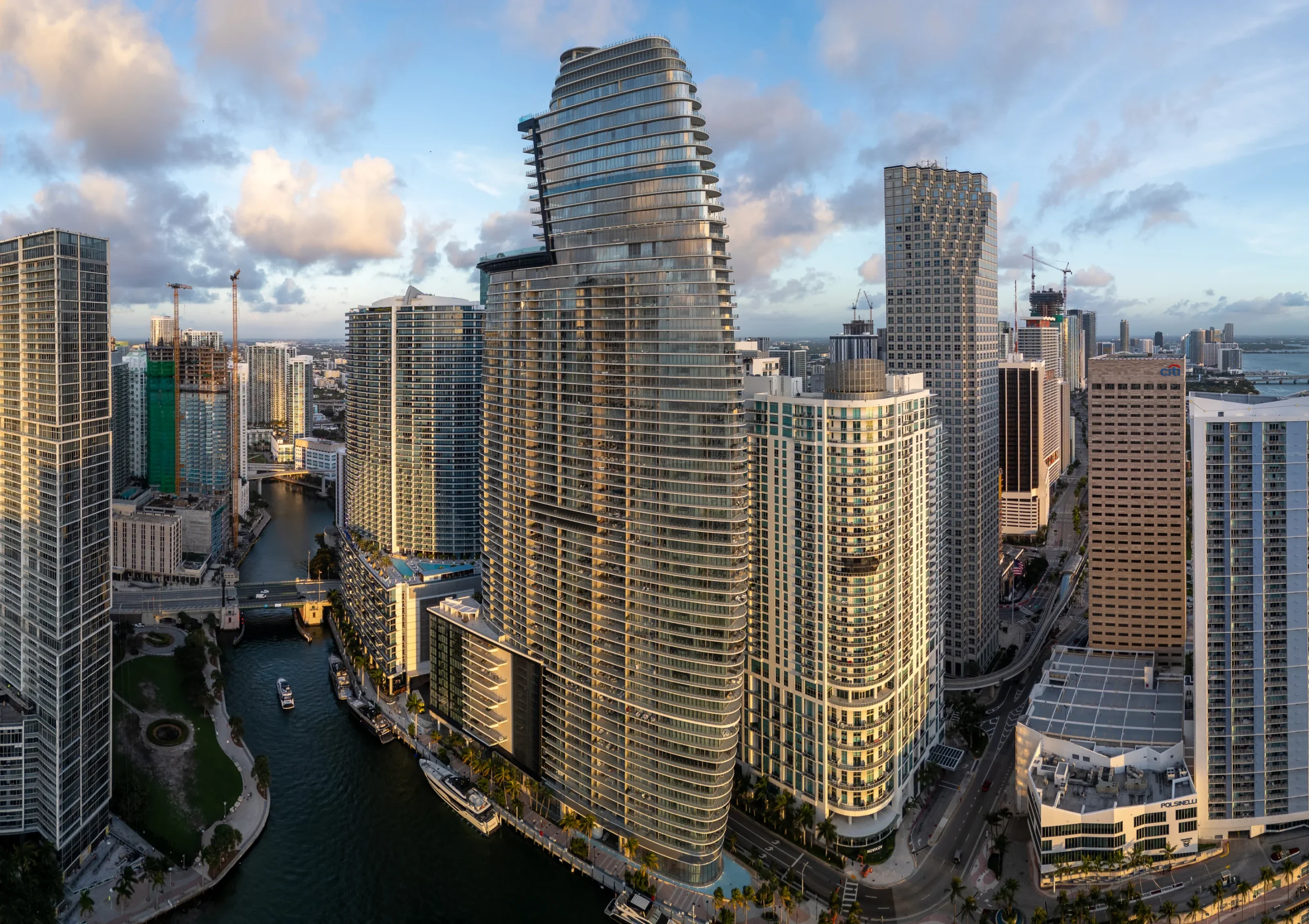
Drone Permission flies roof and facade documentation for Miami-Dade associations working toward SIRS and Milestone Inspection compliance, on the same FAA Part 107 licensed, LAANC-authorized flights we fly for projects like Aston Martin Residences. We coordinate directly with your engineer or reserve specialist so the imagery matches what their report needs.
Talk to us about your building → or see our full drone inspections and recertification services in Miami.