Miami-Dade County · FAA Part 107 Licensed & Insured
Drone Inspections in Miami: 40-Year Recertification & Facade Documentation
A Florida registered engineer or architect performs your recertification and signs the report. We do not, and no drone company can. What we do is fly the building and hand your design professional the facade and roof documentation the county's updated guidelines now require that report to contain, without scaffolding, a swing stage or a sidewalk closure.
- 25 or 30 yrsCurrent threshold, not 40, for buildings built after 1992
- 90 daysTo submit the report once the county's notice arrives
- Part 107Licensed and insured, LAANC ready
Talk to us about a facade survey
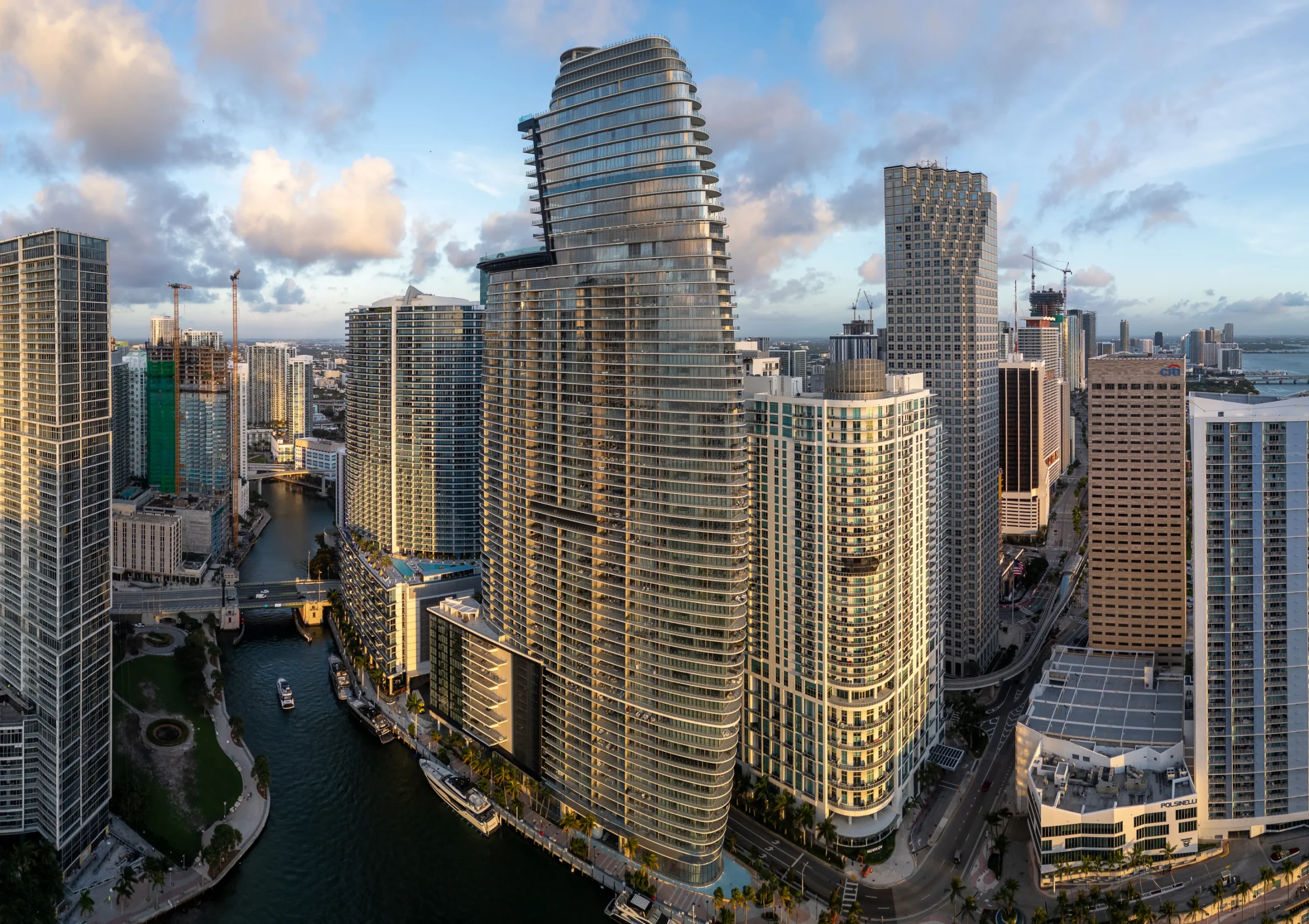
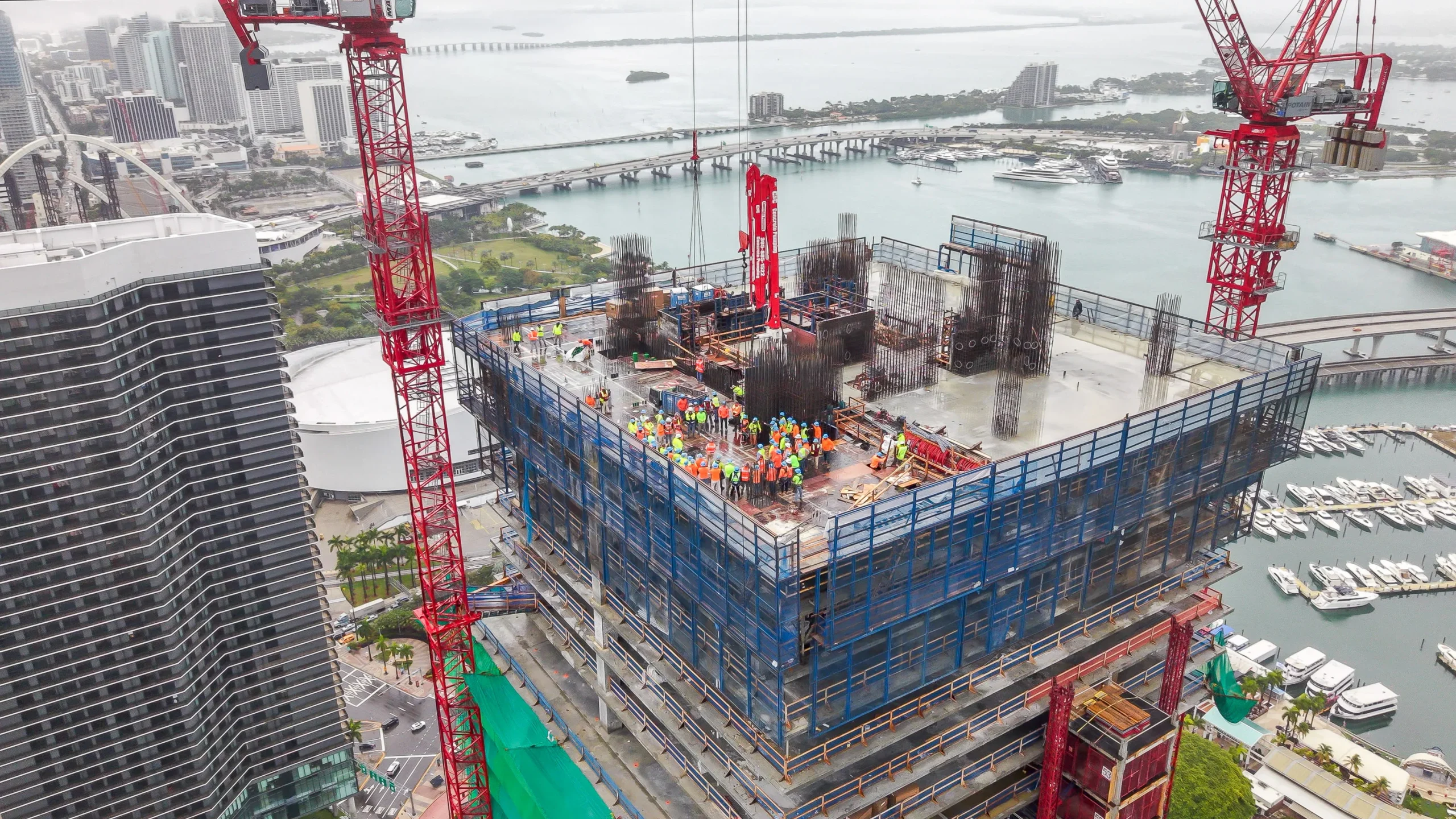
Aston Martin Residences at the mouth of the Miami River, Brickell
Almost everything published about the 40-year recertification in Miami is out of date, including pages currently ranking at the top of Google for it. Miami-Dade amended the program on June 1, 2022, and for most buildings built after 1992 the first recertification no longer arrives at 40 years. The county also rewrote what the inspection has to cover and what has to be photographed. This page covers the current rule, where the deadline actually comes from, and the one narrow part of the process a drone is genuinely good for.
What Is the Miami-Dade 40-Year Recertification, and What Changed in 2022?
Miami-Dade has required periodic structural and electrical recertification of existing buildings since 1975. In 2022 two things happened at once. Florida's SB-4D took effect on May 26 and created milestone inspections for condominium and cooperative buildings three stories and taller. The county amended its own program on June 1, then rewrote its inspection guidelines and report templates.
The name stuck and the number moved. Everyone still calls it the 40-year recertification, including the county in conversation, but the schedule in the code now turns on when the building was built and how close it sits to the coastline. A 2001 oceanfront tower is not on a 40-year clock. It is on a 25-year one.
The program sits in Chapter 8 of the Code of Miami-Dade County. Single family homes, duplexes, and buildings with an occupant load of ten or fewer and two thousand square feet or less do not go through the process at all.
See also: drone services in Miami

When Is My Building Due for Recertification?
It depends on the year it was built and whether it sits within three miles of the coastline. Coastal condominium and cooperative buildings three stories or taller built in 1998 or later are due at twenty five years of building age. All other buildings built in 1993 or later are due at thirty years. Older buildings were on a fixed 2024 date.
| Building | First recertification | After that |
|---|---|---|
| Built 1982 or earlier, initial recertification already done | Continues on its established schedule | Every 10 years |
| Condominium or cooperative, three stories or taller, within three miles of the coastline, built 1983 to 1997 | Was due December 31, 2024 | Every 10 years |
| All other buildings built 1983 to 1992 | Was due December 31, 2024 | Every 10 years |
| Condominium or cooperative, three stories or taller, within three miles of the coastline, built 1998 or later | At 25 years of building age | Every 10 years |
| All other buildings built 1993 or later | At 30 years of building age | Every 10 years |
Miami-Dade sends advance courtesy notice roughly two years before the cycle, then again one year out, then a final ninety day notice. The report is due within ninety days of that notice. An extension of up to sixty days can be requested, and it requires a signed and sealed statement from your engineer or architect that the building may continue to be occupied while the recertification is underway.
Structural sealant glazing on threshold buildings runs on a separate and shorter clock. Under Florida Building Code section 2415.7.4 and Miami-Dade code section 8-11(f)(v), that glazing is recertified every five years, not every ten.
Where your actual deadline comes from
There are thirty five municipalities in Miami-Dade County and each one's building official has jurisdiction over permitting, inspections and recertification for buildings inside it. The table above is the county framework. Your date, your forms and your submission process come from the agency that sent you the notice. Confirm against the county's recertification page or the notice itself before you plan around anything you read online, this page included.
What Does the Updated Inspection Actually Have to Cover?
More of the building than it used to, and with photographs. The Board of Rules and Appeals approved revised guidelines and report templates that widen the facade scope, add building components that were not previously called out, and make photo documentation part of what the design professional submits. Three of those changes describe work that is slow or unsafe from the ground.
The whole facade, not just the openings
The county now requires the facade to be included wholistically. Not just balconies, railings and windows, but cladding and any appurtenance that can become detached. That is a full elevation survey rather than a spot check of the obvious components.
Parapets and hanging mansards
Top of building conditions such as parapet walls and hanging mansards must be closely examined for signs of deterioration. These are the surfaces nobody sees from the sidewalk and nobody should be leaning over a roof edge to photograph.
Photo documentation, inside the report
Photo documentation is now part of what the design professional submits with the written report. Organized, dated, located imagery is a deliverable the rule asks for, not a courtesy extra.
The structural report template also added foundation conditions, signs of overloading in load carrying components, and special or unusual features such as membrane structures, chimneys, retaining walls and seawalls. The electrical template added infrared thermography on systems operating at four hundred amperes or greater, performed with approved equipment by a certified technician. Proprietary reporting forms are not accepted, and as of January 2025 the 2025 cycle and everything after it must use the county's current templates.
Can a Drone Do My 40-Year Recertification?
No. Miami-Dade requires the recertification report to be prepared by an engineer or architect registered in Florida, and that professional signs it and owns the finding. Any company telling you their drone satisfies the program is describing something the code does not allow. What a drone legitimately does is capture the exterior documentation that report is now required to contain.
What we do not do
We do not perform the inspection, we do not prepare or sign the report, we do not certify anything, and we do not submit to the county on your behalf. We are not engineers and we do not employ any. If you need the recertification performed, you need a Florida registered engineer or architect with the structural or electrical qualification the county requires, and that is the first call to make.
What we do
We fly the building and deliver a documented exterior survey: every elevation at facade review range, the roof, parapets and edge conditions from above, and an image set organized so a specific condition can be located again on a specific face at a specific level. Your engineer decides what it means. We make sure they can see it.
See also: drone building inspections
There is a version of this that is worth saying plainly. If your engineer has already scoped the work, has access equipment mobilized, and does not want aerial imagery, you do not need us. The reason to add a flight is coverage and cost: a building can be documented in a day from the air, and the survey usually narrows where access equipment has to go rather than replacing it.
What Does the Facade Survey Actually Deliver?
An organized, dated, located image set rather than a folder of photographs. Every elevation covered at a consistent standoff and overlap, angled detail on parapets, edges and penetrations, and a naming convention tied to the building so a condition found in year one can be found again in year eleven. The engineer's report cites it. It does not replace it.
| What you get | What it contains | Why it matters to the report |
|---|---|---|
| Elevation coverage | Each face of the building flown at consistent altitude and overlap, at facade review range | Supports the wholistic facade assessment the county now requires |
| Parapet and roof edge set | Angled and overhead frames of parapet walls, mansards, copings and roof edge conditions | Covers the top of building conditions the guidelines specifically name |
| Cladding and appurtenances | Detail frames of cladding, attachments, and anything that could become detached | The specific language the county added in 2022 |
| Located imagery | Every frame tied to an elevation and a level, not described as "the north side" | Lets the engineer reference a finding, and lets you find it again next cycle |
| Dated record | Flight date, time and conditions carried with the set | Establishes when the condition was documented |
| Raw imagery | The full capture, not only the selected frames | A later consultant may need something nobody flagged this cycle |
Two practical notes for a board. Ask for the raw imagery alongside whatever summary you receive, because the second survey is worth more than the first and only if both exist in comparable form. And agree with your engineer before the flight on what they want covered, because a facade survey scoped for a reserve study and one scoped for a recertification report are not the same flight.
See also: drone roof inspections
South Florida Buildings
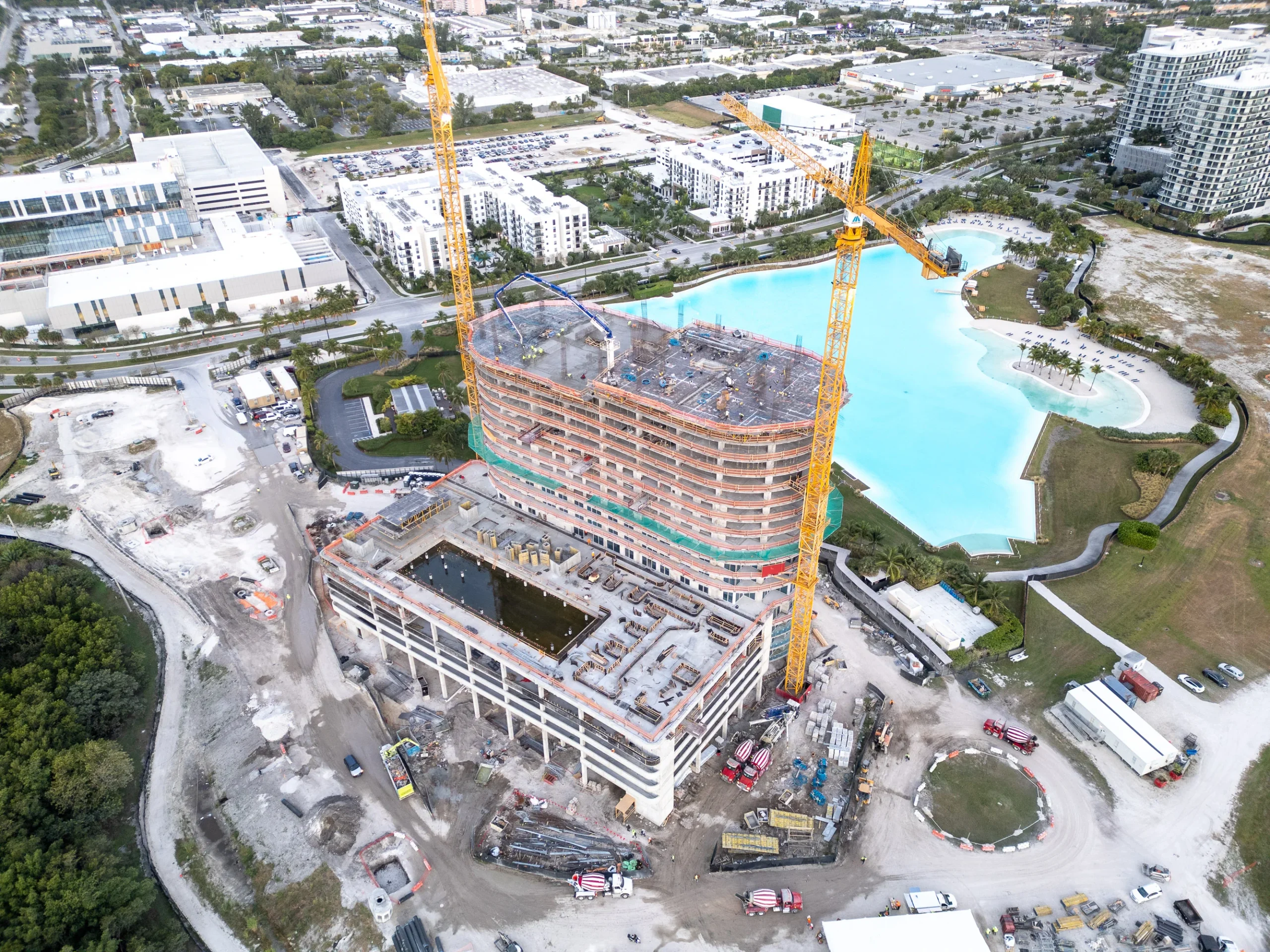
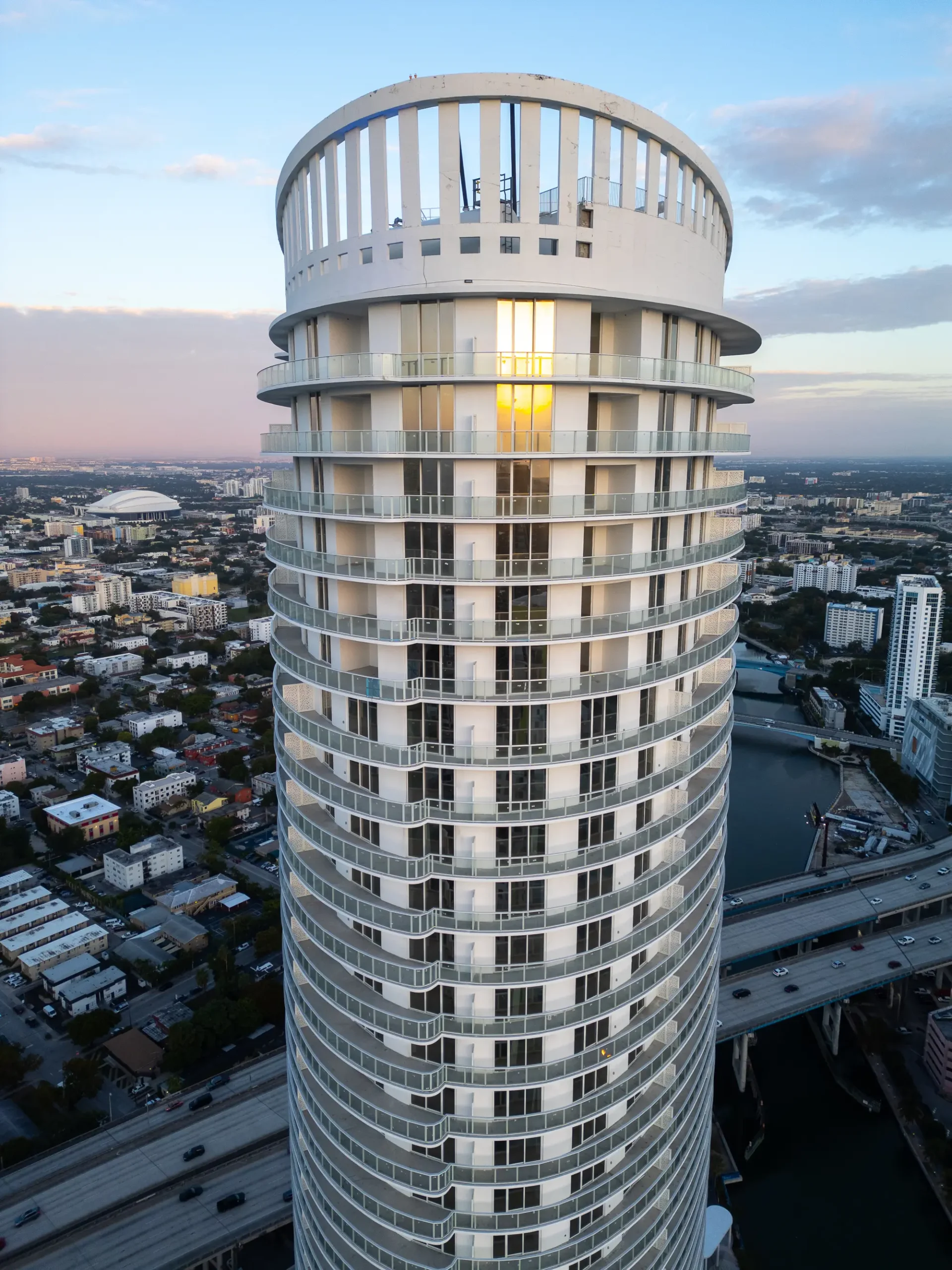
Buildings We Have Documented From the Air
These are project aerials from South Florida buildings rather than facade condition surveys. Click any image to enlarge.
See also: aerial photography services




How Does a Facade Survey Run on an Occupied Building?
Four stages, usually inside one morning. Airspace and building access are cleared before the date, the flight covers the elevations and the roof line, the imagery is organized against the building, and the set goes to your engineer. Residents are not displaced, no hatch is opened, and the sidewalk stays open.
1. Before the date
Airspace authorization, building access, and a short call with your engineer or manager about what the survey has to cover. A recertification survey and a leak investigation are different flights.
2. On site
Elevation passes at a consistent standoff, then angled detail on parapets, roof edges, penetrations and any condition already flagged. The building operates normally throughout.
3. Processing
Frames culled and organized by elevation and level, with a naming convention tied to the building rather than to the flight.
4. Delivery
The organized set plus the raw capture, in a format your engineer can work from and a board member can open.
Miami adds a step most of the country does not have. Almost all of Miami-Dade sits inside controlled airspace, so the flight needs FAA authorization before the date rather than on the morning of, and the published ceiling varies enough that a tall building can sit above the value for its own parcel. Our pilots are FAA Part 107 licensed and insured and handle that as part of scheduling. The full airspace detail is on our page about drone inspections in construction.
Miami-Dade Recertification and Facade Documentation FAQ
Does a drone inspection satisfy the Miami-Dade 40-year recertification?
No. Miami-Dade requires the recertification report to be prepared by an engineer or architect registered in Florida, and that professional signs it. A drone survey produces exterior documentation the report can cite, including the photo documentation the county's updated guidelines require. It is a tool inside the engineer's work product. It is not the work product and it is not a substitute for the professional.
Is my building really due at 40 years?
Probably not, if it was built after 1992. Miami-Dade amended the schedule in June 2022. Condominium and cooperative buildings three stories or taller within three miles of the coastline built in 1998 or later are due at twenty five years. All other buildings built in 1993 or later are due at thirty years. The program is still called the 40-year recertification, which is why this catches people out.
How do I find out my building's actual deadline?
From the building official of the municipality your building sits in. Miami-Dade has thirty five municipalities and each administers permitting, inspections and recertification inside its own boundaries. The county sends advance courtesy notice around two years out, again one year out, and then a final ninety day notice. If you have received a notice, the date and the requirements on it are the ones that apply to you.
Who is allowed to perform the recertification?
An engineer or architect registered in Florida, with proven qualification by training and experience in the technical field being inspected. For the structural report the county recognizes specific engineering qualifications, including passing the Structural I exam, the Civil exam plus Structural II, the sixteen hour structural test, licensure by examination under Civil before March 1993, or the Florida Board of Professional Engineers structural recognition program. The electrical report requires an engineer licensed under the electrical discipline.
What does the facade inspection have to cover now?
More than it used to. The county's updated guidelines require the facade to be included wholistically, meaning not only balconies, railings and windows but also cladding and any appurtenance that can become detached. Top of building conditions such as parapet walls and hanging mansards must be closely examined. Photo documentation is now part of what the design professional submits with the written report.
Is structural glazing part of the same inspection?
It runs on its own schedule. Under Florida Building Code section 2415.7.4 and Miami-Dade code section 8-11(f)(v), threshold buildings with an exterior facade of structural sealant glazing have that glazing recertified every five years rather than every ten, with a written report from a Florida licensed engineer or architect. If your building has structural sealant glazing, ask your design professional which clock you are on for each.
Can you document the facade without scaffolding or closing the sidewalk?
That is the main reason we get called. A flight documents elevations from a standoff distance without a lift, a swing stage, a sidewalk closure or anyone at a roof edge. Access equipment still wins whenever the engineer needs to touch the surface, sound a panel or take a sample. In practice the survey narrows where that equipment has to go, which is usually a smaller mobilization than covering the whole building blind.
What happens if we miss the deadline?
Ask your building official, because enforcement sits with them and it is not something we can answer for your building. What the county publishes is that a late submission fee applies to reports filed more than ninety days after the notice, and that the building official may grant an extension of up to sixty days on written request from your engineer or architect, accompanied by a signed and sealed statement that the building may continue to be occupied while the recertification is underway.
Is a milestone inspection the same as recertification?
They are two separate requirements that overlap. Florida's milestone inspection comes from Statute 553.899, applies to condominium and cooperative buildings three stories or more, and must be performed by a licensed architect or engineer authorized to practice in Florida. Miami-Dade's recertification program predates it and applies more broadly. A building can be subject to both, and your design professional is the person who sorts out which applies when.
Do you need a license to fly a drone over a building in Miami?
Yes. Any drone flight for compensation requires an FAA Part 107 remote pilot certificate, and almost all of Miami-Dade sits in controlled airspace where the flight also requires authorization for that specific location before takeoff. Our pilots are Part 107 licensed and insured and we file the authorization as part of scheduling. It is worth asking any vendor for both in writing before they fly over your building.
Do you offer other types of drone building inspections in Miami?
Yes. Beyond 40-year recertification and facade documentation, we also fly roof inspections, thermal surveys, and general condition assessments for property managers and engineers across Miami-Dade. See our drone building inspections overview for the full range.
Your Engineer Signs It. We Make Sure They Can See It.
Tell us the building, roughly when it was built, and whether you are working ahead of a notice or against one already in hand. We will tell you what a facade survey should cover for your engineer and what the airspace over that address allows. If what you actually need is the recertification itself, we will say so and point you to a Florida registered professional instead.
Talk to us about a facade survey
Or call 305-878-9689
A selection of South Florida projects documented by Drone Permission