Drone Building Inspections in Miami: Roofs, Facades, and High-Rises
A drone building inspection uses a licensed drone pilot to capture high-resolution imagery of roofs, facades, and hard-to-reach structures, so issues can be identified without ladders, scaffolding, or rope access. In Miami, where high-rise buildings, coastal corrosion, and recertification deadlines collide, drone inspections give owners, property managers, and engineers a faster and safer way to see the true condition of a building.
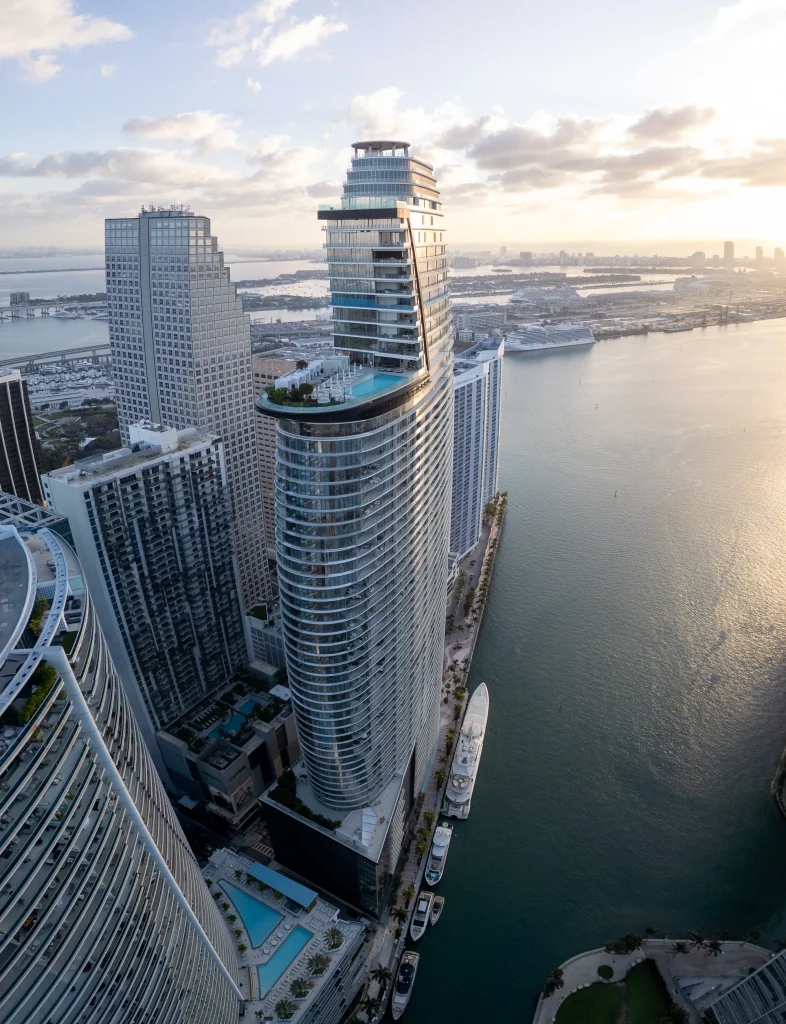
Drone Permission has flown some of Miami's most complex sites, from the Aston Martin Residences to the MSC Cruise Terminal at PortMiami. Our pilots are FAA Part 107 licensed and insured, and we handle LAANC airspace authorizations in the controlled airspace that covers most of Miami. If your building needs eyes on the roof or facade, we can get them there this week.
Key Takeaways
- Drone inspections capture roofs, facades, and high-rise exteriors without scaffolding, ladders, or shutting down building access.
- A typical drone inspection takes 30 to 60 minutes on site instead of hours or days for manual methods.
- Florida condos 3 stories or taller now face milestone inspections at 25 or 30 years, and Miami-Dade runs its own recertification program. Drone imagery gives engineers the visual documentation these reports depend on.
- Most of Miami sits in controlled airspace. Flying legally requires FAA Part 107 certification and LAANC authorization, which Drone Permission handles on every mission.
- Deliverables include organized photo sets with GPS data, zoom and oblique imagery of problem areas, and video walkthroughs your engineer or insurer can use.
What Is a Drone Building Inspection?
A drone building inspection is a visual assessment of a structure's exterior performed with a camera-equipped drone flown by an FAA-certified pilot. The drone captures high-resolution stills, zoom detail shots, and video of roofs, facades, balconies, and equipment that would otherwise require lifts, scaffolding, or rope access to see. The imagery is then reviewed by the building owner, property manager, or a licensed engineer.
The drone does not replace the professional judgment of an engineer or inspector. What it replaces is the most dangerous, slowest, and most expensive part of the job: physically getting a person next to every square foot of the building envelope. Instead of assessing a 40-story tower from a swing stage over several days, an engineer can review complete aerial documentation captured in a single morning.
Because every image carries GPS and timestamp data, drone inspections also create a dated record of building condition. That record matters when you are tracking deterioration over time, documenting conditions before hurricane season, or supporting an insurance claim.
What Can a Drone Inspect?
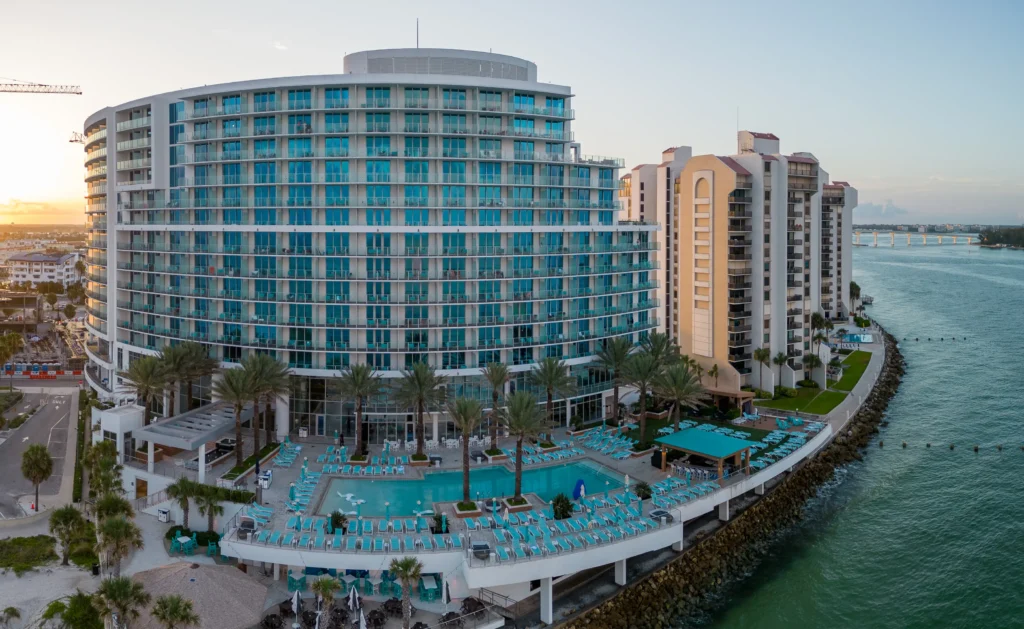
Drones can inspect almost any exterior element of a building or site: roofs, facades, balconies, windows, parking structures, towers, solar arrays, and rooftop equipment. Anything visible from the air can be documented in high resolution, including areas that are unsafe or impractical for a person to reach, such as high-rise curtain walls, steep roofs, and crane-adjacent zones on active construction sites.
- Roofs. Membrane condition, ponding, flashing, missing tiles or shingles, and damage after storms, captured from directly above rather than at an angle.
- Facades and balconies. Cracking, spalling, stucco delamination, and sealant failure on mid- and high-rise buildings, using zoom lenses that resolve fine detail from a safe standoff distance.
- Rooftop and elevated equipment. HVAC units, antennas, telecom equipment, and solar panels.
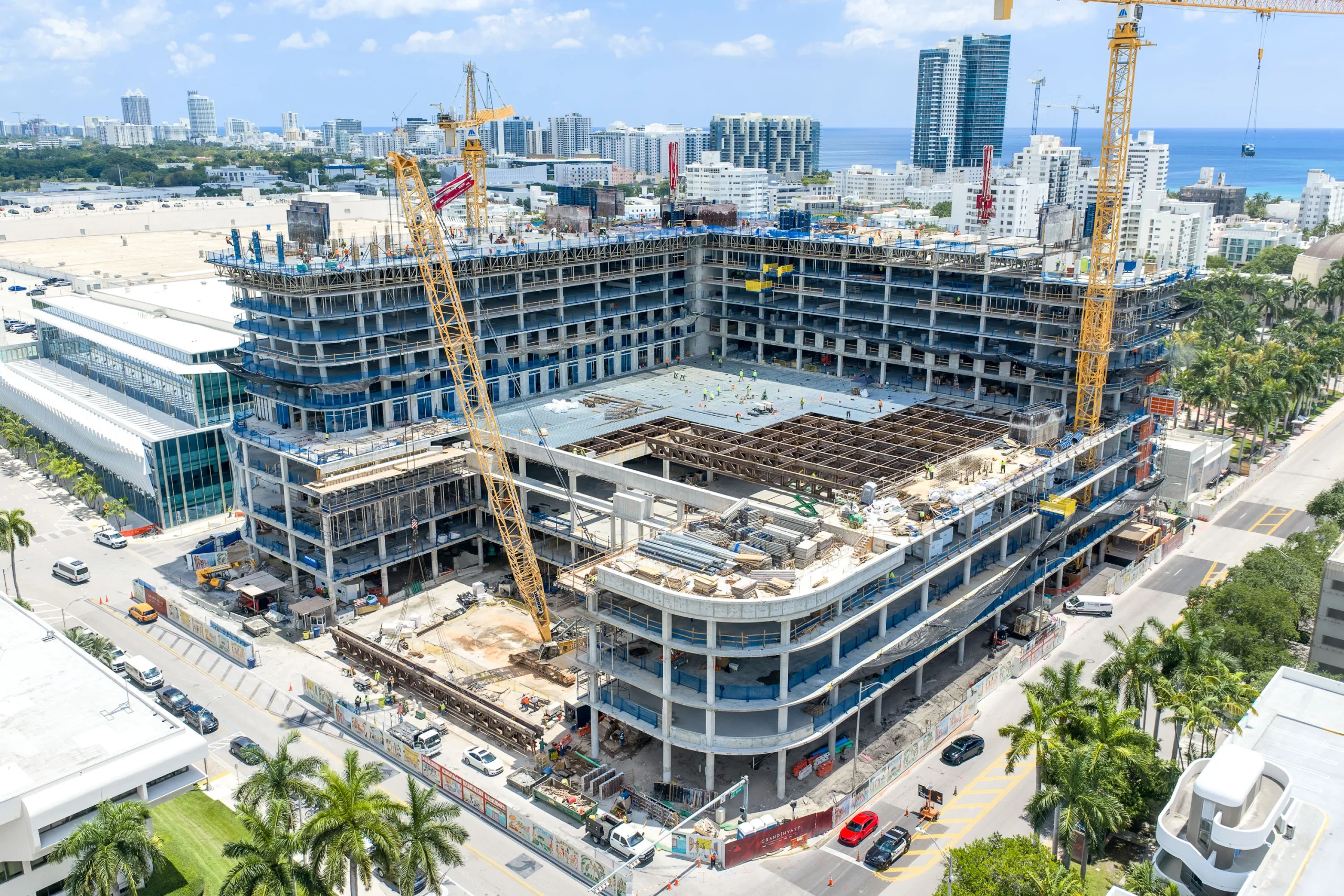
- Construction sites. Structural progress, formwork, and quality documentation on active jobsites, where our team already works daily. See our construction drone services.
- Land and low-rise portfolios. Multiple buildings documented in one mobilization, useful for HOAs and property management companies.
Drone Inspection vs Traditional Inspection: Which Is Better?
Drone inspections are faster, safer, and usually cheaper than scaffolding, lifts, or rope access, and they produce more complete visual coverage. Traditional hands-on methods still matter when an engineer needs to physically touch, probe, or test materials. In practice the two work together: drones identify and document problem areas, and hands-on inspection is targeted only where it is needed.
| Factor | Drone Inspection | Scaffolding / Lift / Rope Access |
|---|---|---|
| Time on site | 30 to 60 minutes for most buildings | Hours to multiple days |
| Safety | No one leaves the ground | Work at height, fall risk, liability |
| Building disruption | None; no equipment staged on site | Scaffolding erection, blocked access, resident notice |
| Coverage | Full envelope, including angles a person cannot reach | Limited to accessible areas |
| Documentation | Geotagged, timestamped photo and video record | Inspector notes and handheld photos |
| Hands-on testing | Not possible; visual only | Yes; probing and material testing |
| Typical cost | Lower; single visit, small crew | Higher; equipment rental plus labor at height |
Can Drones Help With Florida Milestone Inspections and Miami-Dade Recertification?
Yes. Florida law now requires milestone structural inspections for condo and co-op buildings 3 stories or taller, starting at 30 years of age, or 25 years for buildings near the coast. Miami-Dade County also runs its own long-standing building recertification program. A licensed engineer or architect must perform and sign these inspections, and drone imagery gives that professional complete, current visual documentation of the roof and facade to work from.
After the Surfside tragedy, Florida's SB 4-D created statewide milestone inspection deadlines, and thousands of South Florida buildings are working through them right now. For engineering firms and condo associations, the bottleneck is often simple visibility: getting a clear look at every elevation of an aging tower without erecting scaffolding around it.
That is where our team fits in. We fly the building, capture every facade and the full roof in high resolution, and deliver an organized image set your engineer can review, mark up, and attach to their report. Problem areas get targeted zoom passes. If the engineer needs a second look at a specific balcony line or parapet, a follow-up flight costs a fraction of remobilizing equipment.
We are not engineers and we do not issue recertification reports. We make the engineers who do faster, safer, and better documented.
How Much Does a Drone Building Inspection Cost in Miami?
Residential drone roof inspections typically run a few hundred dollars, while commercial buildings, high-rises, and multi-building portfolios are quoted per project based on building height, site complexity, airspace requirements, and deliverables. Even at the high end, drone inspections generally cost far less than the scaffolding, lift rental, or rope-access crews they replace.
The main factors that move the price:
- Building size and height. A 40-story facade inspection involves more flight time and battery cycles than a single-story roof.
- Airspace. Most of Miami requires LAANC authorization, and some zones require additional coordination. We handle this, but complex airspace adds planning time.
- Deliverables. A photo set with GPS data is the baseline. Orthomosaics, 3D models, and measurable outputs through our drone mapping services add processing work.
- Recurrence. Scheduled inspections, such as pre- and post-hurricane-season flights, are priced better than one-off mobilizations.
Every building is different, so we quote per project. Contact us with the address and what you need documented, and we will send a quote quickly.
How Does a Drone Inspection Work in Miami's Controlled Airspace?
Nearly all of Miami, from Downtown and Brickell to Sunny Isles, sits under controlled airspace tied to Miami International Airport and surrounding facilities. Flying there legally requires an FAA Part 107 certified pilot and, in most locations, a LAANC airspace authorization. Drone Permission obtains these authorizations as part of every mission, so your inspection is flown safely and legally without you touching any paperwork.
Our process is simple:
- Scope and quote. Send the address and what you need inspected. We check the airspace, plan the flight, and send a quote.
- Flight day. Our pilot arrives, secures any required authorization, and captures the full inspection in one visit. On active jobsites our crews follow PPE and site safety protocols; construction sites are where we work every day.
- Delivery. You receive organized, geotagged imagery and video through a secure link, typically within a few business days.
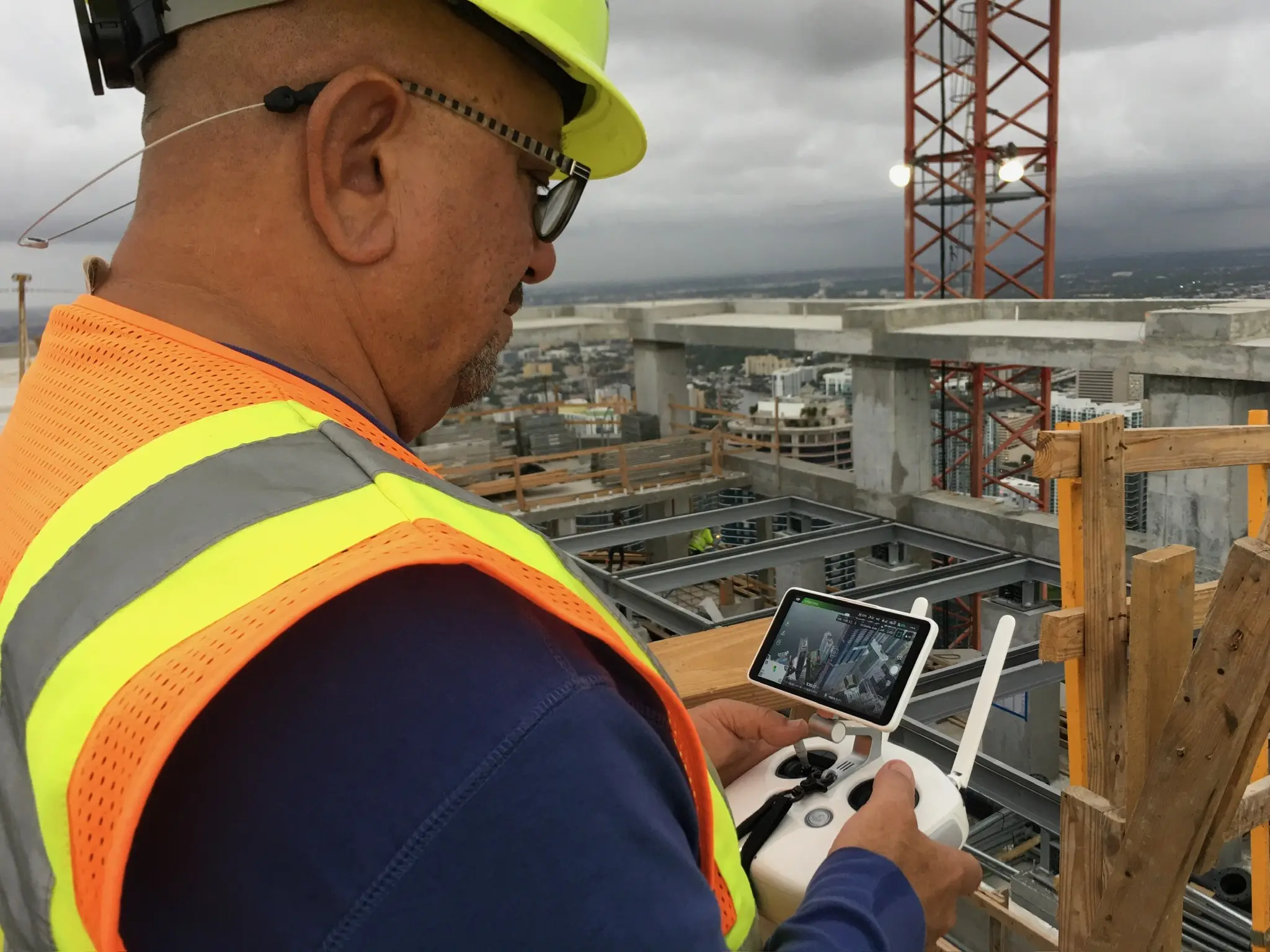
Weather delays are rescheduled at no cost. South Florida wind and rain are facts of life, and forcing a flight in bad conditions produces bad data.
Buildings and Sites We Have Flown
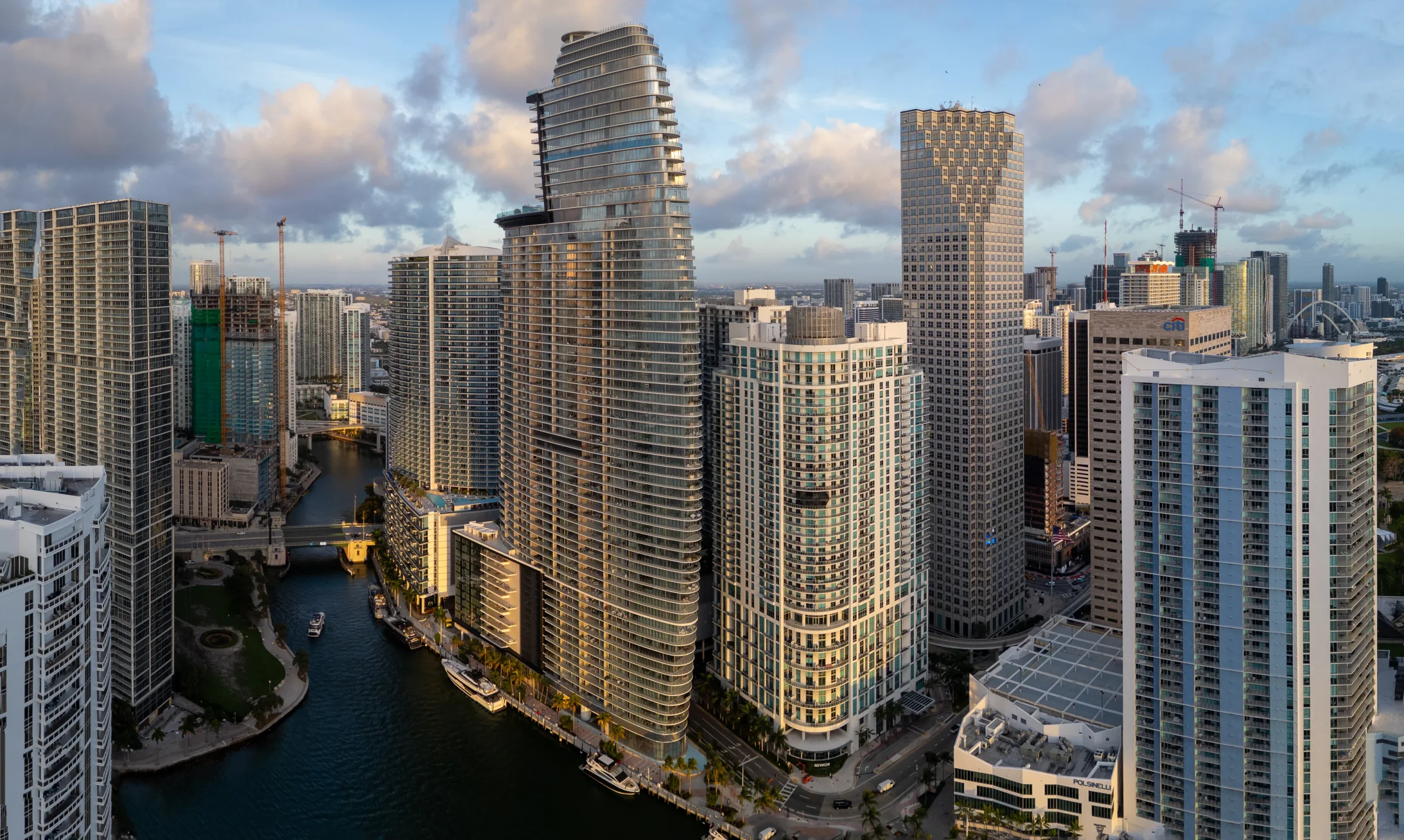
Drone Permission has documented some of Miami's most demanding structures, most notably the Aston Martin Residences, which we documented from foundation to top-off through years of flights in one of the city's tightest airspace corridors, along with the MSC Cruise Terminal at PortMiami across more than 40 monthly visits. High-rise work in tight, controlled airspace is not a special request for us. It is our normal week.
That experience matters for inspections specifically: flying close to a curtain wall in coastal wind, coordinating with cranes on active sites, and capturing consistent imagery across repeat visits are learned skills. Our team also provides aerial photography and video and full drone services across Miami, so inspection imagery can be captured alongside progress documentation or marketing content in a single mobilization.
Frequently Asked Questions
Do I need a permit to have my building inspected by drone in Miami?
You do not need anything as the building owner. The drone operator needs FAA Part 107 certification and, in most of Miami, LAANC airspace authorization. Drone Permission handles both on every flight.
Can a drone inspection replace my 40-year recertification or milestone inspection?
No. Those inspections must be performed and signed by a licensed engineer or architect. Drone imagery supports that professional with complete visual documentation of the roof and facades, which usually makes their inspection faster and more thorough.
How long does a drone building inspection take?
Most single buildings are captured in 30 to 60 minutes on site. Large towers or multi-building properties can take a few hours. Deliverables typically arrive within a few business days.
How detailed is the imagery?
We fly enterprise-grade drones with high-resolution and zoom cameras that resolve cracks, sealant failure, and surface deterioration from a safe standoff distance. Thermal sensors are available for moisture and insulation surveys.
Can drones inspect a roof after a hurricane for an insurance claim?
Yes. Geotagged, timestamped aerial imagery is a strong way to document storm damage, and capturing a pre-season baseline makes post-storm claims even clearer. Insurers routinely work with drone documentation.
Can you fly close to a high-rise in Downtown Miami or Brickell?
Yes. These areas are controlled airspace, and we fly them regularly under LAANC authorizations. Our pilots are experienced operating around towers, cranes, and coastal wind.
What do I receive after the inspection?
An organized set of geotagged photos, zoom detail shots of problem areas, and video, delivered through a secure cloud link. Mapping deliverables such as orthomosaics and 3D models are available on request.
Do you inspect anything besides buildings?
Yes. We inspect towers, telecom equipment, solar arrays, parking structures, and land. If it can be seen from the air, we can document it.
Schedule a Drone Building Inspection in Miami
Whether you are a property manager facing a recertification deadline, an engineer who needs complete facade documentation, or an owner who wants eyes on the roof before hurricane season, Drone Permission can fly your building quickly, legally, and safely. FAA Part 107 licensed, fully insured, and experienced on Miami's most complex sites.
Or call us at 305-878-9689