Miami · FAA Part 107 Licensed & Insured
How to Plan a Topping Out Ceremony: A Six Week Guide for Project Teams
Planning a topping out ceremony comes down to five decisions: the date, which follows the steel and not the calendar, where to hold it, who gets on the deck and how, the order of the run of show, and what gets published the same afternoon. Everything else is logistics. This guide covers all five, in the order you have to decide them.
- 6 weeksA workable planning runway
- 1 takeThe beam is lifted once
- Part 107Licensed and insured, LAANC ready
Check availability for your ceremony date
The Standard Residences topping out, Brickell, Miami
If you search how to plan a topping out ceremony, Google will hand you the history of the tradition and then, because it has nothing better, a checklist for planning a groundbreaking. There is almost nothing written for the person who has been told the structure tops out in six weeks and needs a plan. This is that document: the timeline, the run of show, how guests get onto an active deck and what they have to sign, the weather call, and what the press receives. If you need the tradition itself explained first, that is on our topping out ceremony page.
Key Takeaways
- Set the date to the final steel pick, not to a convenient Thursday. The structure decides when this happens, and the superintendent is the only person who knows when that is.
- Guests sign the beam, then the speeches happen, then the crane lifts. Reversing that order removes the only moment everyone came to see.
- Guest access to an active deck is a safety and insurance question before it is an events question. PPE, escort ratios, waivers and a certificate of insurance get settled weeks out, not at the gate.
- You are running two events at once: a press moment for the owner and developer, and a thank you for the crew who built it. Plan both or one of them will notice.
- The ceremony lasts an afternoon. The photographs and the film are the only parts that are still working for you a year later, so decide who is capturing them before you decide the catering.
Ceremonies We Have Filmed
What Does a Topping Out Ceremony Actually Look Like?
Three South Florida ceremonies, three completely different formats. Useful as a reference while you decide what yours should be.

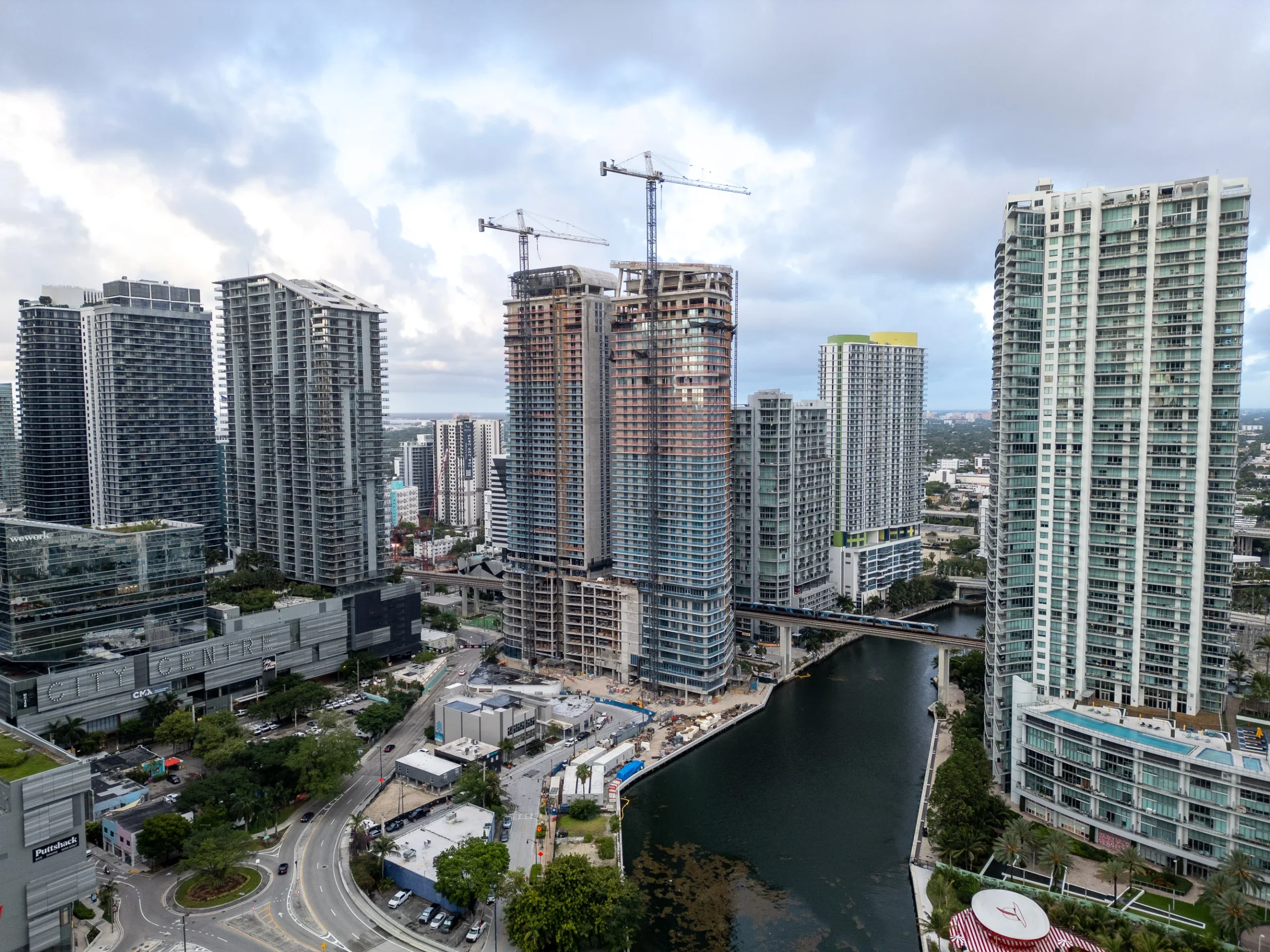
The Standard Residences
Brickell, Miami. A high rise ceremony on an active deck inside controlled airspace.

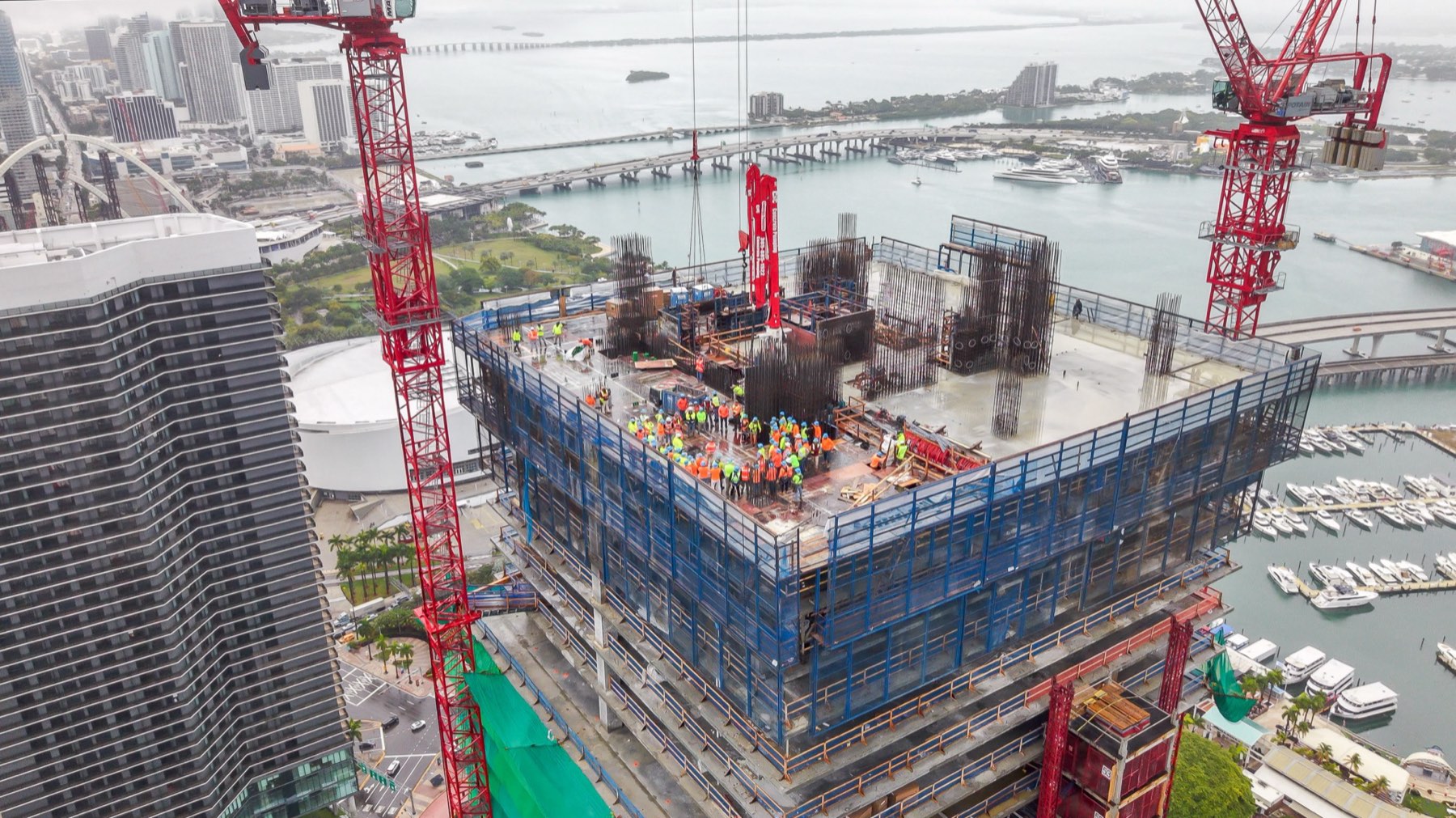
Tower 200 at Shell Bay
Hallandale Beach, FL. A resort project ceremony with the full development team present.

City of Miami Administration Building
Miami, FL. A public sector ceremony with officials and press.
What Does a Six Week Topping Out Timeline Look Like?
Six weeks is tight but workable. Week six locks the date to the steel and names an owner for the event. Weeks five and four handle procurement, the guest list and the location decision. Week three is legal and access, and invitations. Week two is remarks and the press kit. Week one is weather watching and the capture briefing.
Two things drive this schedule and neither is negotiable. The beam and the keepsakes are long lead items that have to be ordered before the date is certain, and guest access to an active site needs paperwork that nobody can turn around in a day. Everything else can compress. Those two cannot.
| When | What happens | Who owns it |
|---|---|---|
| Week 6 | Confirm structural completion with the superintendent and set the date to the actual final pick. Name an event lead, an AV lead, a capture lead and a contingency lead. | Project executive and superintendent |
| Week 5 | Order long lead items: the beam and its white paint, the evergreen, the flag, banners, signing markers, engraved keepsakes. | Event lead |
| Week 4 | Build the guest list in buckets: project stakeholders, government officials, community leaders, media, internal team, and the trades who built it. | Marketing and project executive |
| Week 4 | Settle the location, deck or ground, and walk the route with the superintendent. Decide guest PPE and escort ratios at the same time. | Event lead and superintendent |
| Week 3 | Legal and access: visitor waivers, certificate of insurance, badge list, vendor load in and load out windows. | Risk manager and superintendent |
| Week 3 | Invitations out, with PPE requirements and parking stated in the invitation itself, not in a day before email. | Event lead |
| Week 2 | Speaker remarks written and approved. Confirm names, titles and pronunciations with whoever is emceeing. | Communications lead |
| Week 2 | Press kit assembled: project facts, approved quotes, contacts, renderings. Printed or on a QR code. | Communications lead |
| Week 1 | Watch the forecast daily. Confirm the tent or the indoor fallback. Brief the photo and video team on the shots that cannot be repeated. | Event lead and capture lead |
| Day of | Arrival and PPE issue, beam signing, remarks, the lift, food. | Everyone |
| Same day | Publish. Press release, milestone announcement, and the leasing or sales push. | Communications lead |
If you have more than six weeks, spend the extra time on the guest list and the remarks. Those are the two things that visibly suffer when they are rushed, and they are the two things attendees remember.
The same long lead thinking applies to the earlier milestone on the schedule, which is covered on our page about foundation pours.
What Is the Right Order for the Ceremony?
Signing, then speeches, then the lift. Guests sign the beam while people are still arriving and the energy is informal, remarks happen with the signed beam on the ground as the backdrop, and the crane lifts it at the end as the closing image. Lift the beam first and you have spent your only irreversible moment on an empty audience.
This order is not a style preference. The beam goes up once. Everything before the lift can be repeated, restarted or extended if a speaker is late. Nothing after it can. Putting the pick last also means every camera, every phone and every guest is looking in the same direction at the same time, which is the only way you get the photograph that ends up in the press release.
Keep the remarks short and few. Three to four speakers is the working number: the owner or developer, the general contractor, the architect, and where relevant a public official. Ceremonies that run long almost always run long in this section, and the crew standing in the sun is the audience that notices.
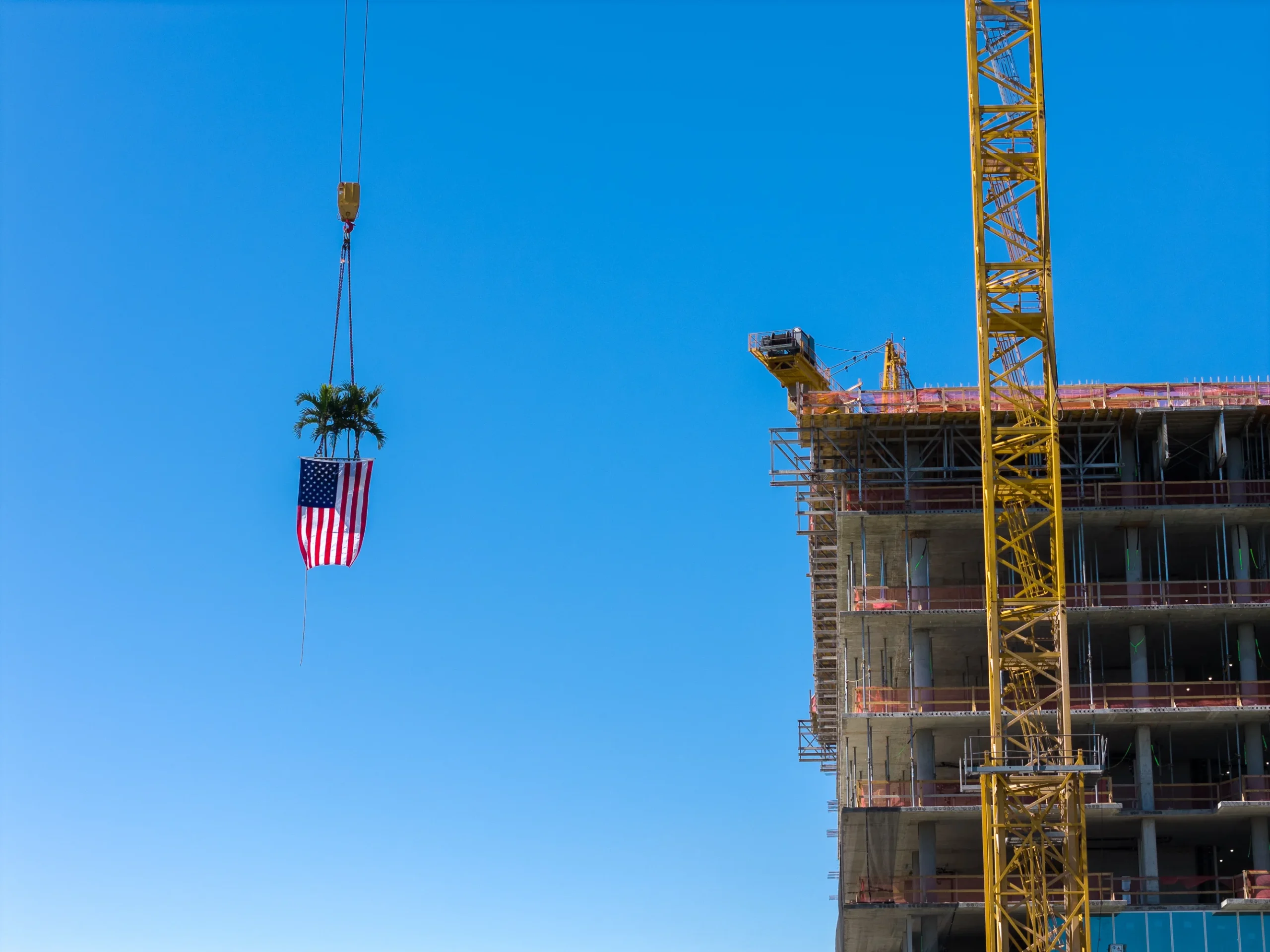
The tree and the flag are fixed to the beam before the lift, which means somebody has to be assigned to do it and it has to be in the run of show. The origin of that tradition is covered on our topping out ceremony page.
Should You Hold It on the Top Deck or at Ground Level?
Ground level at the base of the tower is the common and defensible choice, because it removes the hoist, the escort ratios and most of the risk conversation at once. The top deck is more dramatic and much harder. Decide this in week four, because it determines your guest count, your paperwork and whether the crane is part of the picture.
| Ground level at the base | On the top deck | |
|---|---|---|
| Guest capacity | Effectively unlimited | Limited by hoist capacity and escort ratios |
| Access logistics | Walk in, badge, PPE at a table | Hoist or stairs, timed groups, escorts, a hard cap |
| Risk and paperwork | Standard site visitor process | Open deck, edge protection, and a much longer conversation with risk |
| The photograph | The tower fills the frame, the beam and crane are above | You are in the sky with the skyline behind you |
| Weather exposure | Manageable, a tent works | Wind at height can cancel outright |
| Best when | Large guest list, public officials, press, mixed mobility | Small invited group, strong visual ambition, an experienced site team |
There is a third option worth knowing about. Some teams hold the beam signing off site entirely, in a lobby or an atrium, days before the pick, and then film the lift separately with a small crew. It costs you the shared moment, but it removes every access problem and it guarantees the signatures happen.
Either way the deck is an active work area on the day, which is the same environment covered by our drone services for construction.
How Do Guests Get Onto an Active Site Safely?
Through a process agreed with the superintendent weeks in advance, not negotiated at the gate. Guests in business clothes still need hard hats, high visibility vests and closed toe shoes, they need an escort ratio the site team is comfortable with, and the site needs whatever waiver and insurance documentation its own rules require. Sort this in week three.
PPE for people not dressed for it
Hard hats, vests and closed toe shoes for every guest. Say it in the invitation, then have spares at a check in table, because someone will arrive in heels regardless. Sizes matter more than people expect.
Escorts and routes
Agree an escort ratio and a fixed route with the superintendent, and walk it yourself beforehand. The route determines how long arrival takes, which determines whether the run of show starts on time.
Paperwork
Visitor waivers, the badge list, and a certificate of insurance where your site or your vendors require one. Vendors bringing equipment need load in and load out windows agreed in advance too.
The work itself
Decide with the superintendent what stops and for how long. The lift almost always requires a stoppage in the immediate area. Knowing that number lets you time the rest of the event around it.
The most common failure here is treating access as an events problem discovered a week out. It is a safety and insurance problem, it belongs to the site team, and they will say yes to far more if they are asked in week three than if they are asked on the day.
Who Is the Ceremony Actually For?
Two groups with different expectations, and most published advice only sees one of them. The owner, developer and their guests are attending a milestone announcement. The crew who built the structure are attending a thank you, and in their world that means food, a decent break and often a raffle. A ceremony that serves only the first group is noticed by the second.
Search around and you will find developer and broker write ups describing a ribbon cutting with officials and speeches. Search construction forums and you will find people describing a barbecue where somebody won a cooler. Both are real. They are frequently the same event, and nobody writes about how to run it that way.
In practice the reconciliation is not complicated. Keep the formal portion short, put the food where the crew will actually use it, name the trades from the podium rather than only the companies, and make sure the photographer spends real time on the people in hard hats and not only on the people in blazers. The crew photographs are also, reliably, the ones that perform best afterward.
This matters commercially as well as decently. The trades on this job bid the next one, and the superintendent who felt respected at your ceremony is the same person you need on the next schedule.
What Should the Press Receive, and What Do You Publish?
A press kit prepared in week two: project facts, approved quotes, renderings, contacts, and one named person who speaks to reporters. Publish the same afternoon while it is still news, because a topping out is a dated milestone and its value as a story decays within about a day. Pair it with whatever leasing or sales push the project has ready.
Assign someone to steer reporters and photographers to the strong visuals rather than leaving them to find their own. During a crane pick this is also a safety instruction, because the best angle and the safe standing position are not always the same place, and a professional crew will already know where the line is.
Decide before the day which assets you need out immediately and which can follow. In practice a small set of stills and a short vertical clip go out the same afternoon, and the finished film follows. If a single person is capturing everything, tell them that split in advance so they shoot for it.
Search demand confirms the pairing is real: people search for topping out ceremony press releases in the same breath as ceremony planning. The event and the announcement are one project, not two.
The finished film is a separate track from the same day assets, and that work sits under our video production in Florida.
South Florida Ceremonies
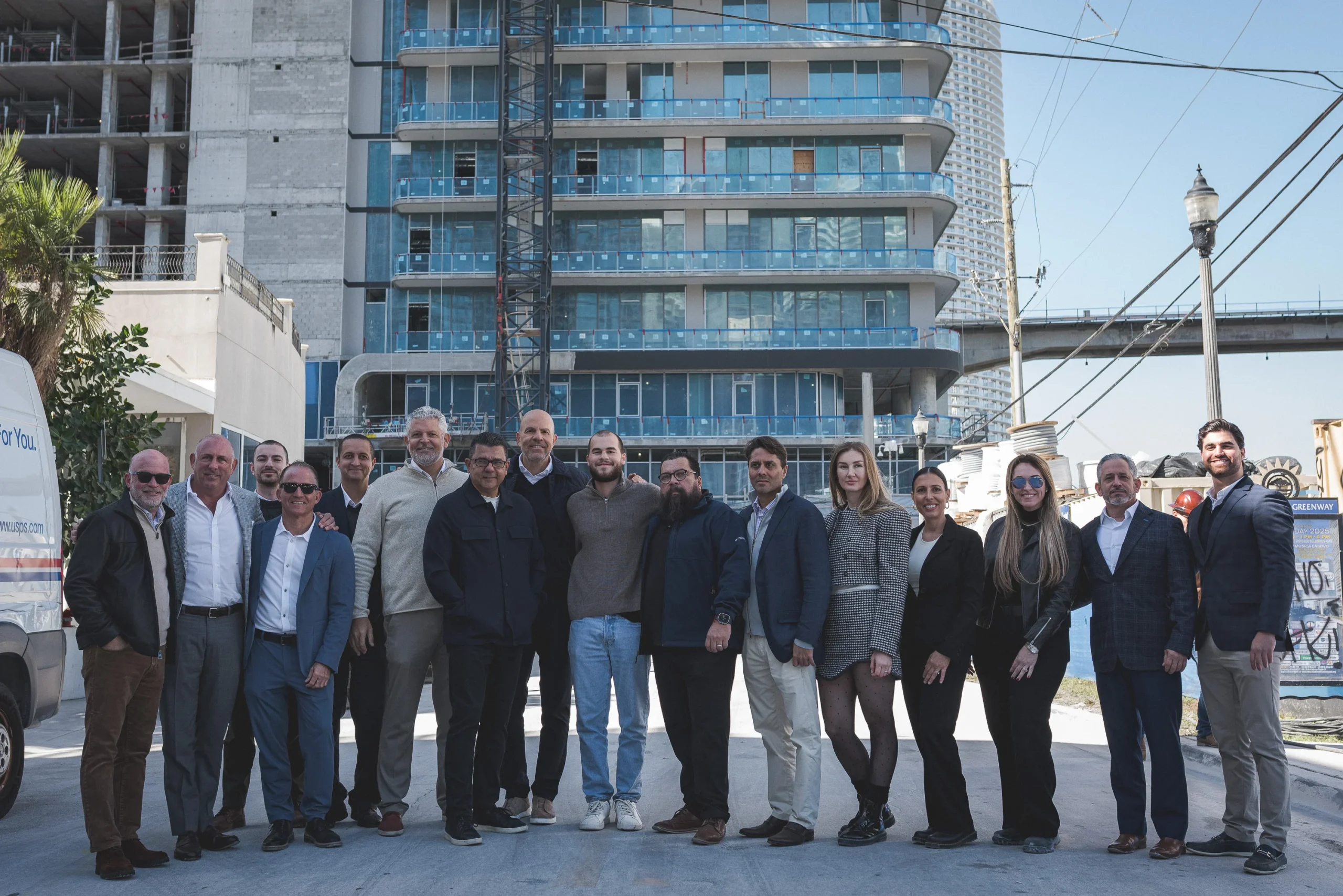
Topping Out Ceremonies We Have Photographed
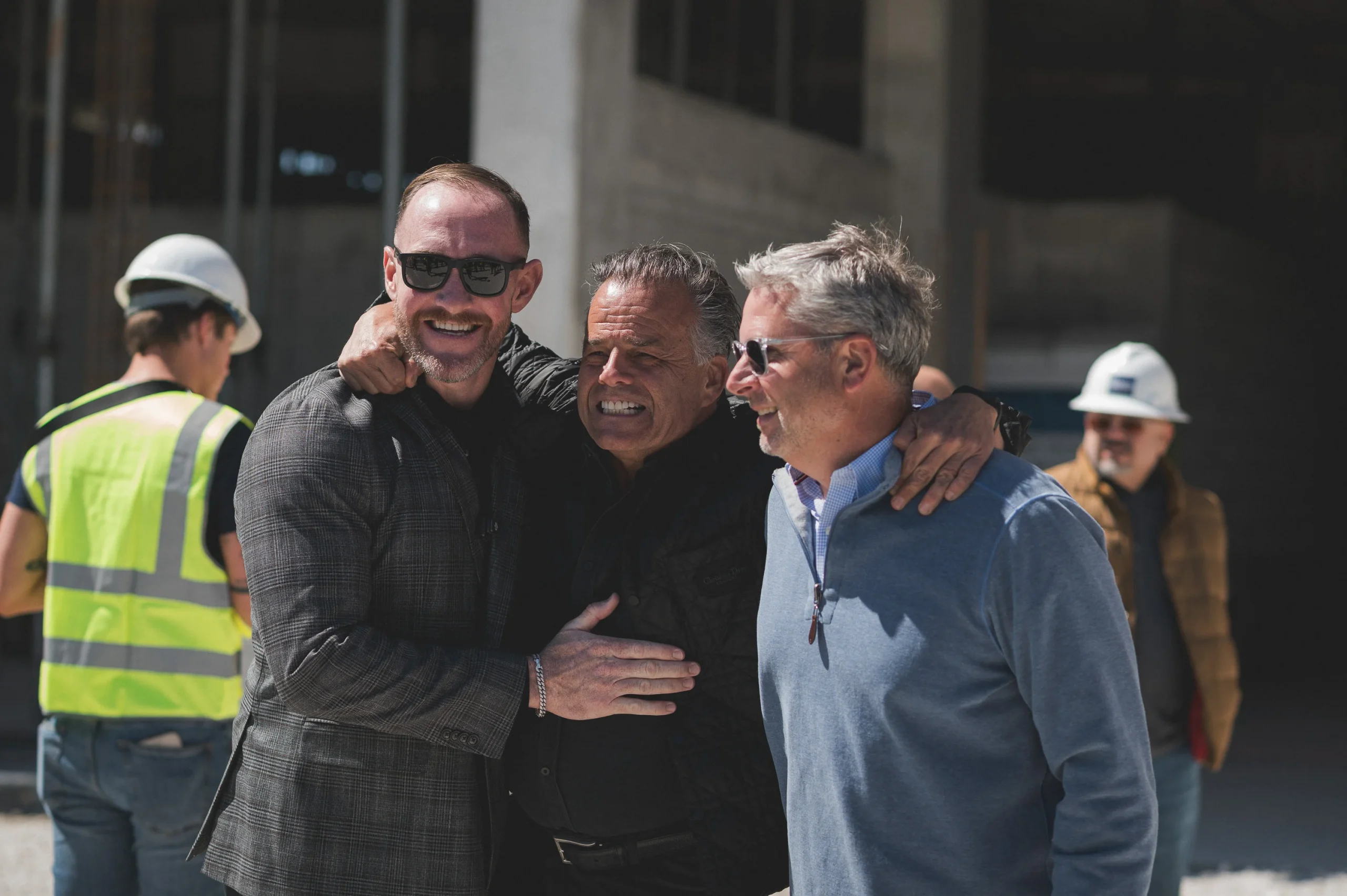
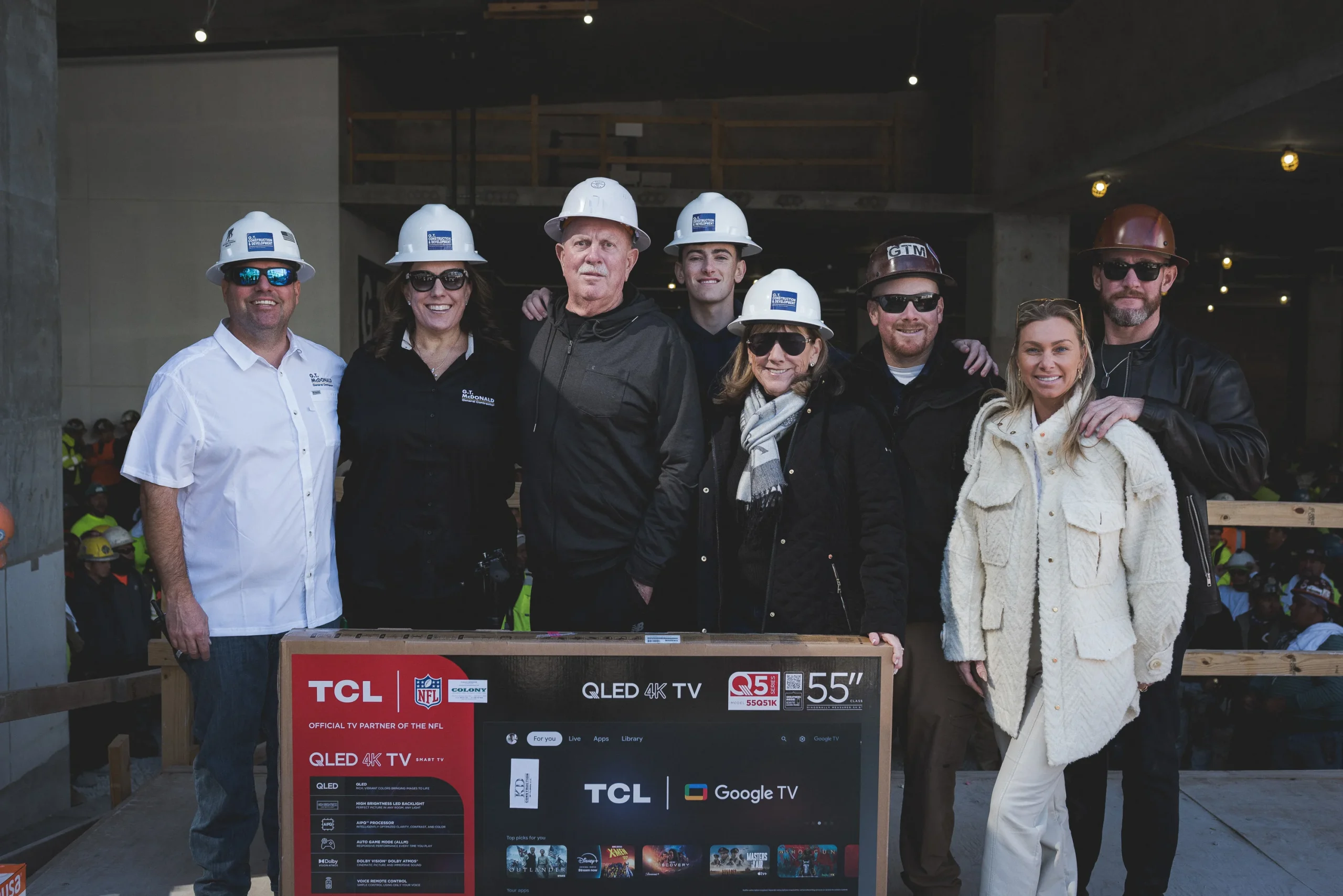
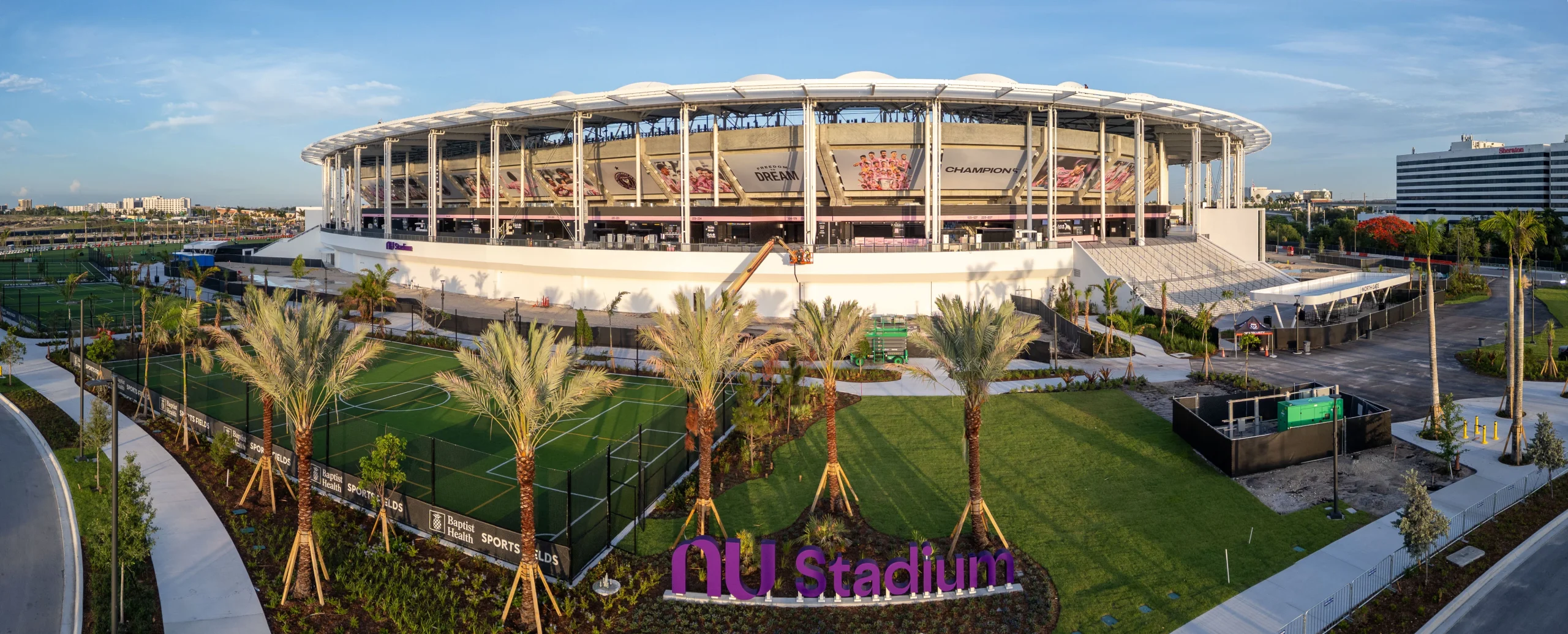
Beam signings, crane picks and crews on the deck. Click any image to enlarge. More of this work sits under our aerial photography services.
Topping Out Ceremony Planning FAQ
How far in advance should you plan a topping out ceremony?
Six weeks is workable and eight is comfortable. The two constraints that set the floor are long lead items, meaning the beam preparation, the evergreen, the flag and any engraved keepsakes, and site access paperwork, meaning visitor waivers, badge lists and insurance documentation. Everything else can be compressed. Those two cannot, and both need to start in the first two weeks.
How long does the ceremony itself last?
Plan the formal portion to be short. Arrival and PPE issue takes longer than teams expect, the signing runs as long as you let it, and the remarks should be three to four speakers at most. The crane lift is quick. Build your schedule around when the site can accommodate the stoppage for the pick, and let everything else flex around that fixed point.
Should guests sign the beam before or after the speeches?
Before. The working order is signing, then remarks, then the lift. Guests sign while people are still arriving and the mood is informal, the signed beam becomes the backdrop for the speeches, and the crane lift closes the event as the moment every camera is pointed at. The beam goes up once, so it should be the last thing that happens, not the first.
Who should be invited?
Think in buckets rather than a list: the owner and developer, the general contractor and design team, the trade partners and the crew who built it, government or community figures where the project has a public dimension, media, and your own internal team. The bucket most often forgotten is the crew, and they are the one group who cannot be replaced at a topping out.
What do guests need to wear, and what do they have to sign?
Hard hats, high visibility vests and closed toe shoes, regardless of what else they are wearing. Put that in the invitation and keep spares at check in. Whatever visitor waiver, badge process and insurance documentation your site normally requires still applies to ceremony guests, and vendors bringing equipment usually need their own paperwork and a load in window.
What happens if the weather is bad?
Decide the fallback in week one and communicate the decision point clearly, because a postponement announced early is far less damaging than one announced at the gate. Wind is the constraint people underestimate, particularly for anything happening at height, and it can stop a lift even on a clear day. A ground level format with a tent is much more resilient than a deck ceremony.
What is the difference between topping out and topping off?
They are used interchangeably in practice, though topping out is the more traditional construction term for placing the final structural member. It is a common enough question that we answer it in full, along with the tree and flag tradition, on our topping out ceremony page.
Can a drone film the ceremony on an active site in Miami?
Yes, with the right authorization. Commercial flights require an FAA Part 107 licensed remote pilot, and most of Miami Dade sits in controlled airspace requiring authorization before the flight, which is handled as part of scheduling rather than on the day. There is also crane coordination to work out with the superintendent, since the lift and the aircraft occupy the same airspace. The local picture is on our page about drone services in Miami.
Your Structure Tops Out Once
Tell us the project, the date the steel is expected to close out, and whether you are planning this on the deck or at the base. We will tell you what the airspace over that address allows and how the capture should be planned around your run of show. FAA Part 107 licensed and insured, working South Florida jobsites.
Check availability for your ceremony date
Or call 305-878-9689
Tower 200 at Shell Bay topping out, Hallandale Beach